Desert Roads & Secondhand Stories: Traveling Through Utah and Navajo Land
Traveling through Utah feels familiar in a way I didn’t expect—quintessential Southwest. The same wide skies, red rock, and long stretches of road I know from Arizona, but a vibe all its own. Everything stretches—land, sky, distance between places. Towns are few and far between. Gas stations, roadside stops, places to pause—they don’t come often.

It’s the kind of landscape that quietly asks you to slow down. To pay attention. To notice what’s in front of you before it disappears behind you.
This region sits on the traditional lands of the Navajo Nation, and moving through it carries a quiet responsibility—to observe, to respect, and to recognize that this land holds stories far older than anything we bring with us.
We made our way through Monument Valley, where the scale of the land humbles you almost immediately. The formations feel steady and enduring, like they’ve been watching time pass without needing to move.
A Loom in Cameron
Driving through the Cameron Chapter of the Navajo Nation, we had the opportunity to watch a live weaving demonstration.
A large upright loom stood anchored in place, wool stretched tight across its frame. The weaver worked with a quiet rhythm—steady, practiced, intentional. The kind of movement that comes from doing something not just often, but over generations.
There was no explaining or performing—it simply was. A moment of work, of craft, of something deeply rooted in tradition.
I didn’t take a photo. It didn’t feel like the kind of moment meant for a camera.
Some things are better held in memory.
Gathering, Not Shopping
Leaving the Cameron area, I couldn’t shake the feeling that everything I had just seen was connected—land, plants, wool, and the hands that turn it into something lasting. It stayed with me in a quiet way.
Out here, there weren’t many thrift stores. They were few and far between—just like the towns, the gas stations, the places to stop and pause.
But I stopped anyway. Every roadside stand, every small local shop, every thrift store I could find. And maybe that’s what made it feel different. It wasn’t convenience—it was intention. Each stop felt earned, like you had to be paying attention not to miss it.

The rest of the trip, I found myself looking at things differently. Not just as secondhand or thrifted, but as pieces with a past—materials that came from somewhere, made by someone, used in real life before finding their way onto a shelf again.
By the time I stepped into each place, it didn’t feel like browsing.
It felt like gathering—little fragments of story, texture, and place to bring home.
What Thrift Stores Teach You About a Place
Out here, thrift stores weren’t lined up or easy to find. They appeared the same way everything else did—unexpected, spaced out, and a little bit hidden.
A small building off the side of the road. A hand-painted sign. A place you could miss if you blinked.
And when you did find one, it felt different. Slower. Less picked through. Less curated. Like it was simply holding what had been left behind, waiting for the right person to come across it.
There weren’t endless options, and that was the point. You couldn’t rush it. You had to take your time, move through each shelf, notice what was actually there. What people wore. What they kept. What they let go of.
Each stop felt like a small window into the life of that place—honest, unpolished, and real.
And in between those stops, there was space. Long stretches of road, desert, and quiet—giving you time to think about what you actually wanted to bring with you, and what was better left where it belonged.
A Living Valley

On our way back toward Arizona, we stopped at Canyon de Chelly—a place that stayed with me in a different way. Tucked into the canyon walls are ancestral Puebloan homes, built directly into the rock.
Below, the valley is still alive—still being farmed today.
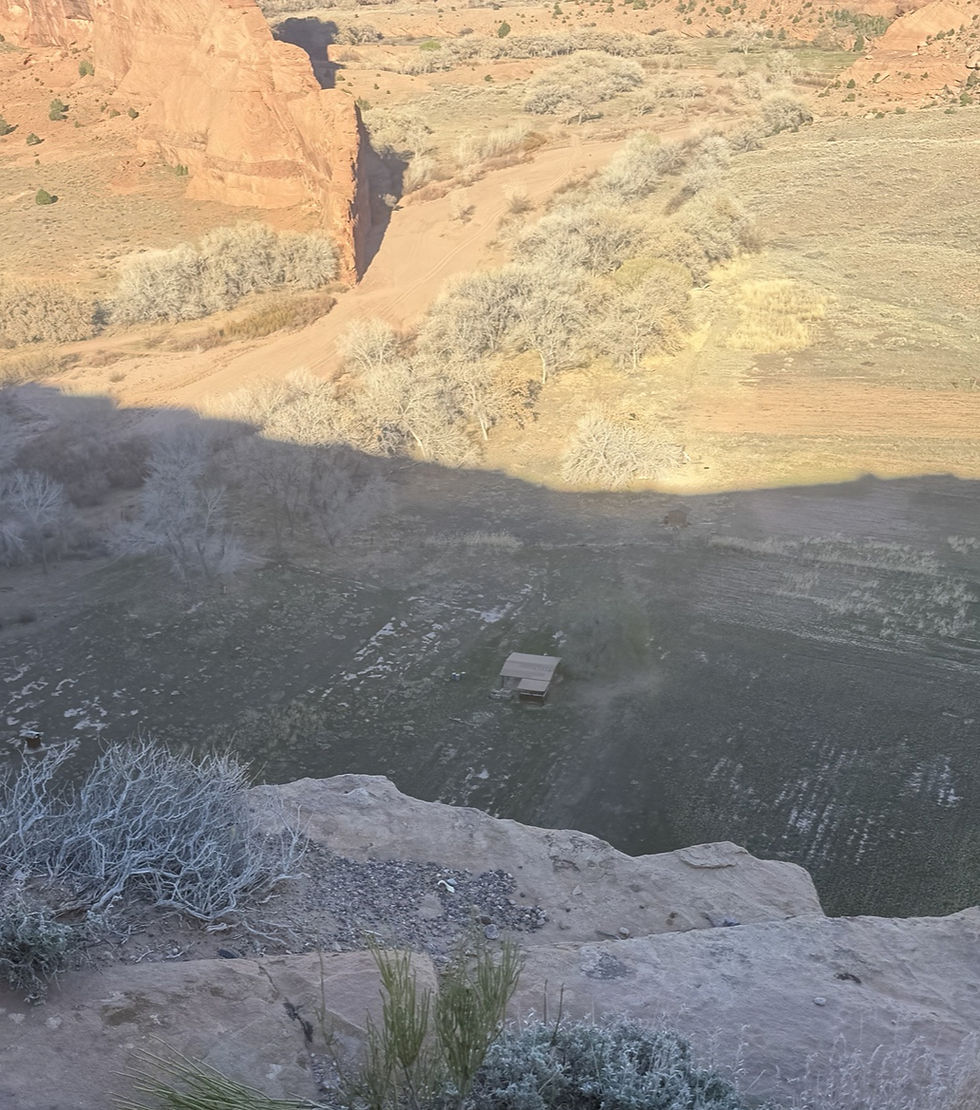
As someone who farms and understands the care and commitment it takes to work the land, that moment felt deeply grounding. A thriving valley, cultivated and cared for over thousands of years. It wasn’t just history—it was continuity. A reminder that tending the land isn’t new, and that there’s something powerful in being part of that lineage, even in a small way.
From Plant to Wool
Later in the trip, we stopped at Hubbell Trading Post National Historic Site—the longest continuously operating trading post in the American Southwest, established in 1878 and still active today.

It’s the kind of place that holds layers of history—part store, part cultural space, part connection point between land, craft, and community.
While we were there, we saw Navajo-Churro sheep nearby, their wool thick and varied in natural tones. Inside, there was a loom set up with wool in process—not as a demonstration, but as a window into how everything comes together.
There was also a display that explained something I hadn’t fully considered before—where the color comes from.

Pressed desert plants were arranged around a woven sample, each one connected to yarn dyed from that plant. The tones were soft and grounded—dusty greens, warm browns, muted yellows—colors that felt like they belonged to the land itself.
Seeing it all together—the sheep, the wool, the loom, and the plants—made the process feel complete in a way that’s easy to miss when you only see the finished piece.
The wool on the loom wasn’t just thread—it was the desert, translated into fiber. Before leaving, I learned a simple word: Ahxhee — thank you.
It felt like the right word for the moment.
What Stayed With Me
By the end of the trip, it wasn’t just the places that stayed with me—it was the feeling of it all. The quiet lessons in craftsmanship, the connection between land and materials, and the reminder that the things we surround ourselves with can hold real meaning.
Thrifting along the way felt less like shopping and more like honoring that—choosing pieces that have already lived a life and letting them continue on in a new one.
And somewhere in between desert roads and small-town stops, I was reminded how much I needed this kind of pause.
Seeing family, slowing down, being present—it filled my cup in a way that lingers long after you’re home.
For the experience, the stories, and the reminder to move through it all a little more intentionally -- Ahxhee 🤍


Comments